

Project Description

Before there were houses and fences, roads and cars, mule deer made the Eastern Sierra their home. To this day, the deer still spend their summers in the mountain meadows, where they give birth and find the food and water they need to thrive. Each spring and fall, they move between the valley floor and their summer range. The routes they have traversed are part of a migration corridor, or a network of trails that wildlife have followed for centuries – or longer.
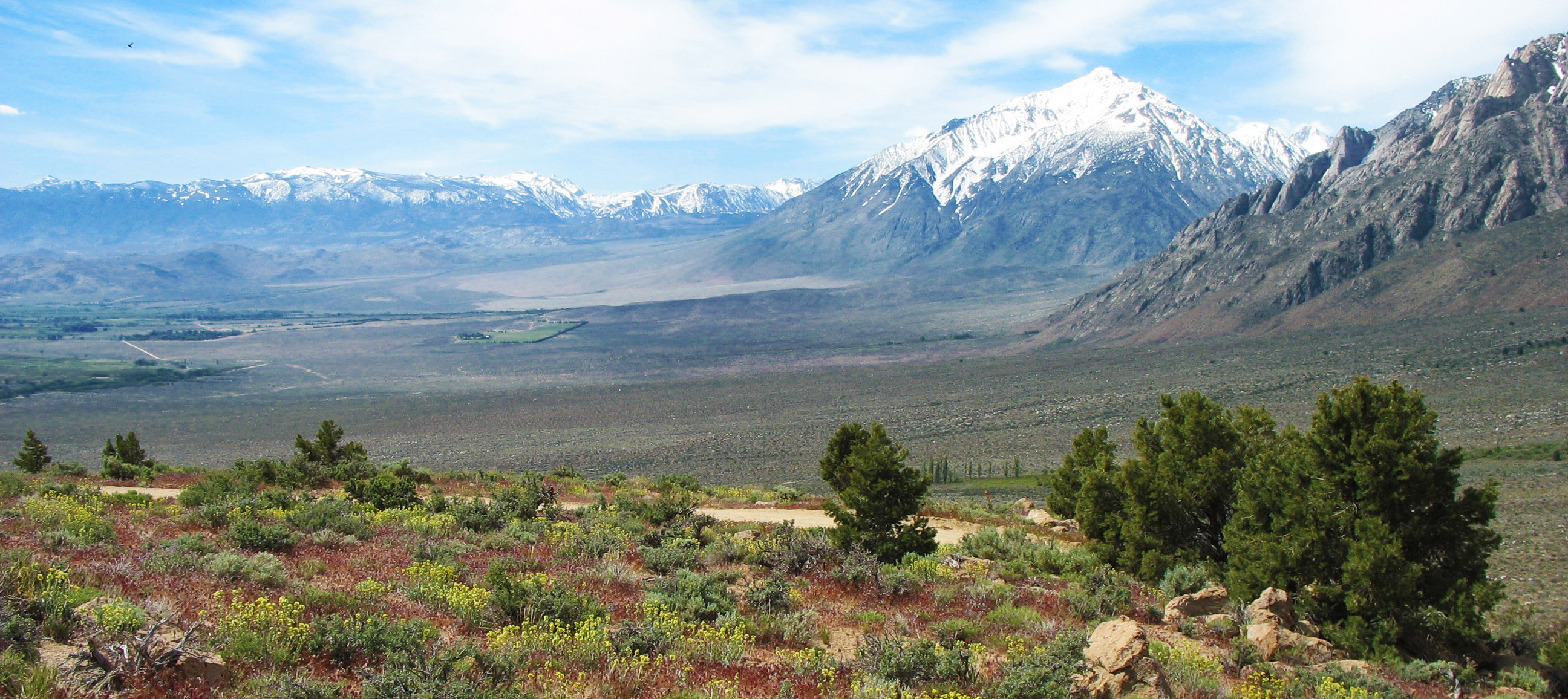
Swall Wildlife Preserve protects a key section of the migration corridor for the Round Valley mule deer herd.
Obstacles and opportunities along ancient migration routes
Wildlife like the Round Valley mule deer herd need to navigate a world spliced by roads, fences, and changing landscapes. Conservation efforts with the Eastern Sierra Land Trust are part of a larger effort to secure migration corridors and protect vital wildlife habitat, forever.
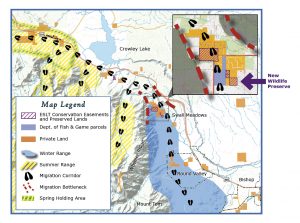
The black tracks on the map highlight the migration corridor for the Round Valley mule deer herd.
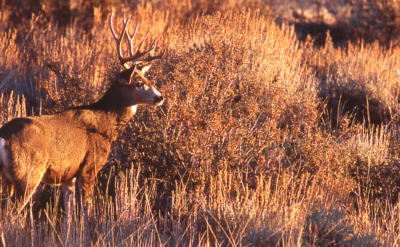
Twice a year, the Round Valley mule deer herd, which consists of approximately 1,500 Rocky Mountain mule deer, travels between its winter range on the valley floor and the alpine meadows of the Sierra Nevada. Nearly 75% of the herd migrates north in the spring, through Swall Meadows, a unique high-desert community that is also home to a passionate group of conservation-minded landowners. In Swall Meadows, the migration route bottlenecks, constrained by the cliffs of Wheeler Ridge to the west and the deep canyon of Lower Rock Creek Gorge to the east.
In 2001, concerned by how increased residential development would affect the deer’s annual migration, the forward-thinking residents of Swall Meadows came together. Easement by easement, they began protecting critical wildlife habitat and formed what would become the Eastern Sierra Land Trust (ESLT). Since then, ESLT has completed more than 29 conservation projects and conserved nearly 24,000 acres throughout this region. Today, 269 acres of private land are conserved along the migration corridor.
Mule deer benefit not only from a safer passage but also from a steady source of foraging material. Because the Round Valley deer herd has a relatively small winter range of about 30 square miles, maintaining healthy habitat is critical.
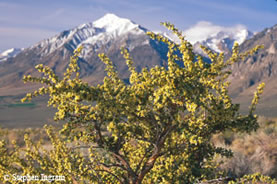
Bitterbrush is especially important to deer in the fall when they return from the high elevations.
Native plants such as sagebrush and antelope bitterbrush are the mule deer’s primary sources of food. The leaves and shoots provide significant sources of calcium, phosphorus, fat, and crude protein at a critical time of year.
Conserving the Mule Deer Migration Route, one easement at a time
Read more about the easements in Swall Meadows by clicking on their photos below.
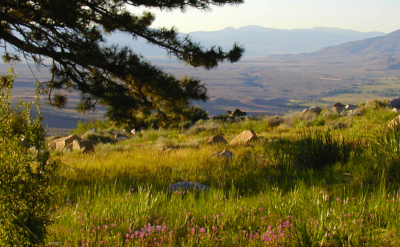
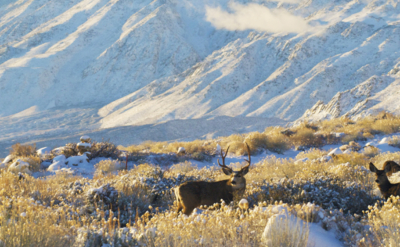
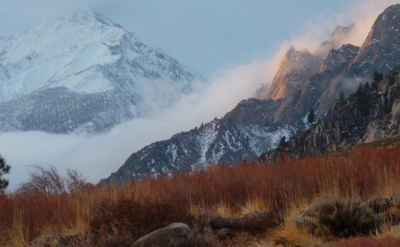
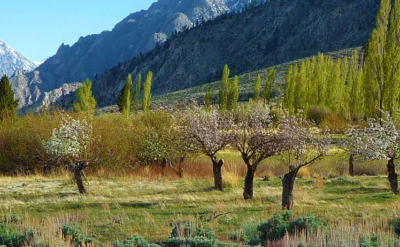
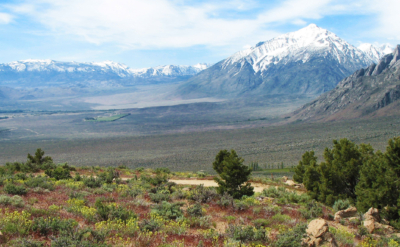
To balance the needs of people and wildlife, ESLT partners with landowners to develop voluntary land protection agreements known as conservation easements. Since our founding, local families, ranchers, and conservation supporters have used such easements as a tool to protect wildlife habitat and intact landscapes. Together with additional lands protected by the California Department of Fish and Wildlife, our conservation efforts have connected public and private properties in the middle elevations, including Swall Wildlife Preserve, to the High Sierra meadows that the deer seek out each year.
Habitat restoration and Round Fire recovery efforts
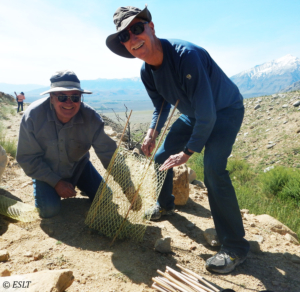
Randy Keller (left) and Bob Waldron (right) are two of the many volunteers who have joined us to protect young bitterbrush seedlings.
In February 2015, the Round Fire ignited in Round Valley. Dozens of families lost their homes in Paradise and Swall Meadows, and hundreds of mule deer did too.
After the fire, Eastern Sierra Land Trust teamed up with volunteers, residents, agencies, and other local organizations to help restore the corridor. Together, we planted thousands of new bitterbrush starts, protected naturally-occurring bitterbrush seedlings, and prevented invasive weeds from gaining a foothold.
In 2023, the stewardship team at ESLT joined efforts initiated by Karen and Stephen Ingram, landowners in Swall Meadows, to map known invasive weeds on conservation easements. Using annual population data, the Ingrams and ESLT identified high-priority areas for treatment. With permission from neighboring landowners, the Ingrams initiated early control efforts by spraying the mapped knapweed populations—an essential task that must be repeated at least twice each year to remain effective. These efforts are ongoing.

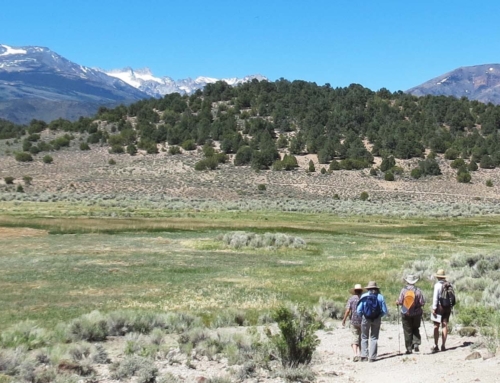
Hikers enjoying the views at Swall Wildlife Preserve.
Forward-thinking landowners like the Ingrams in Swall Meadows, along with conservation supporters, partner organizations, community members, and wildlife advocates, are essential in the ongoing protection of the Mule Deer Migration Corridor. These conservation efforts require ongoing stewardship and protection to secure vital habitats that people–and wildlife–depend on for survival.
Every donation to Eastern Sierra Land Trust is part of a larger story connecting us to a world where wildlife, people, and ways of life can thrive, forever.
Support our work to protect migration corridors and important wildlife habitat.
Thank You to Our Supporters and Partners
Bureau of Land Management – Bishop Field Office
www.blm.gov/office/bishop-field-office
Bishop Office: 760-872-5000
California Department of Fish & Wildlife – Region 6
wildlife.ca.gov/Regions/6
Bishop Office: 760-872-1171
California Deer Association
caldeer.org
1-888-499-DEER
Wildlife Conservation Board
ww.wcb.ca.gov
916-445-8448
Private Landowners in the Migration Corridor