

In the spring and summer, if you drive up the 395, you may be surprised by the lush meadows you see on the valley floor, which look quite different from the sagebrush and Pinyon Juniper woodlands at higher elevations. Oftentimes, those meadows are the result of centuries of committed land stewards irrigating these areas for agricultural use. Tribal flood irrigation is even older. Indigenous Tribes, including the Owens Valley Paiute, have routed runoff from the melting snows into the Owens Valley for thousands of years.
Today, many of these meadows remain actively irrigated and grazed, as farmers and ranchers produce food in these valleys. In other words, they are active, working lands. Many of the ranches within ESLT’s service area, such as Desert Creek Ranch Conservation Easement, are also NRCS-designated grasslands of special environmental significance because they are Bi-state sage-grouse habitat.
The ecological benefits of working ranches with active conservation easements are also their underground vaults, by which we mean, their soil. In this vault, swap out rubies and diamonds for a more essential source of life: carbon.
“Carbon is the building block of all life on earth,” explains Ziani Paiz, a rangeland conservationist with Eastern Sierra Land Trust. “Some plants are better at storing carbon in their roots than others. Perennial grasses are really good at it.”
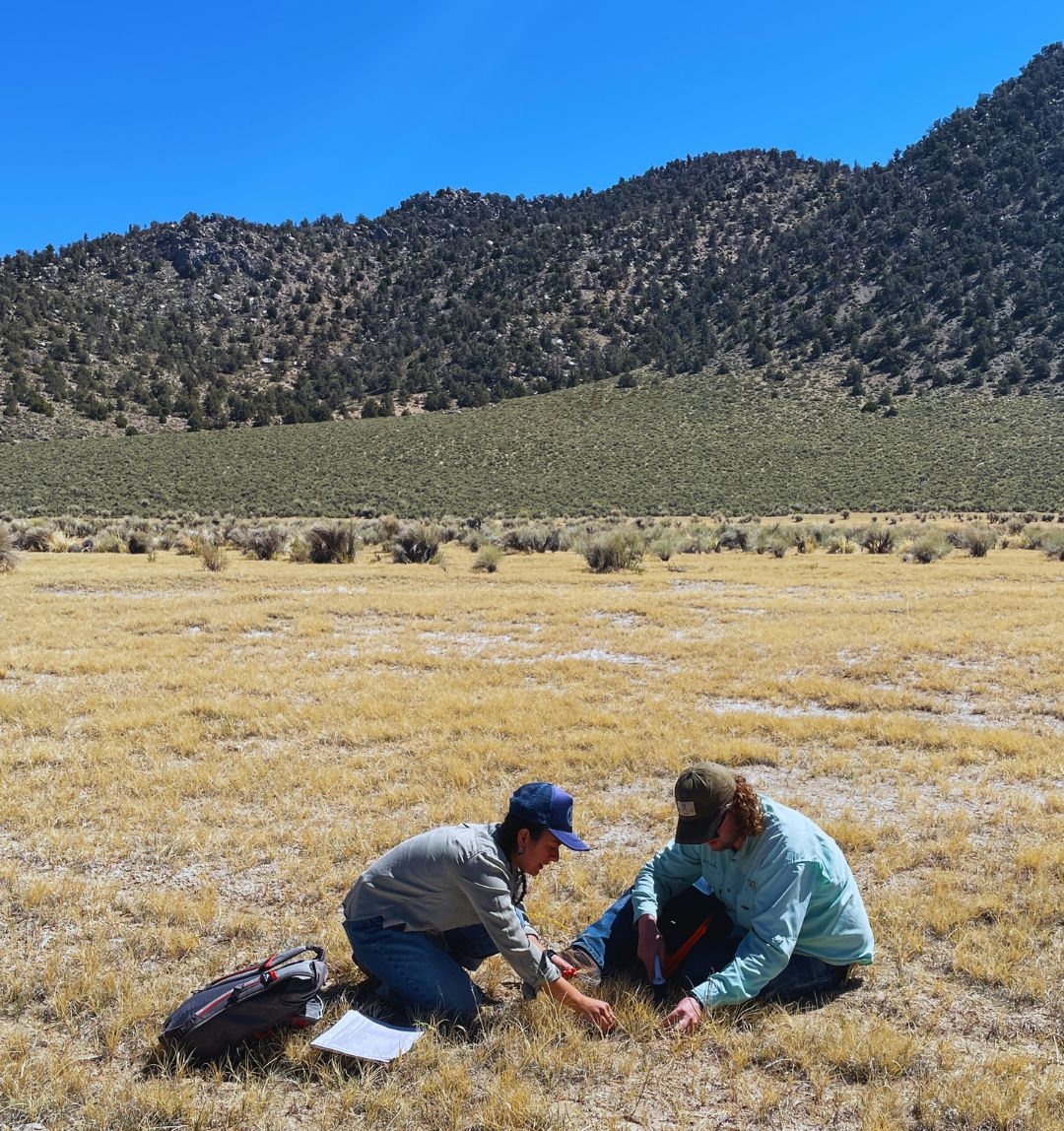
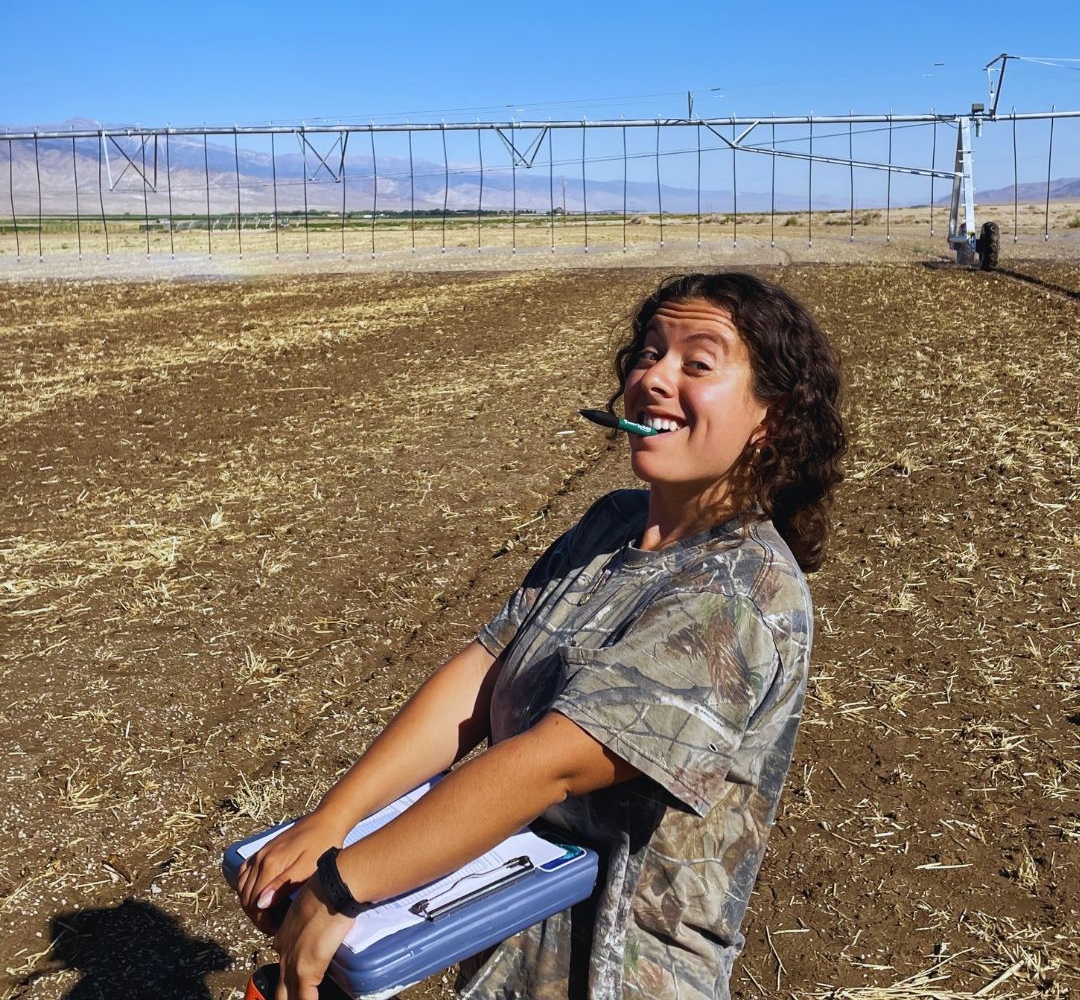
Above photos: (1) Rangeland Conservationist, Ziani Paiz, and Soil Conservationist, Spencer Ostergaard conducting rangeland health assessments in Adobe Valley. 2) Soil scientists in Round Valley taking soil samples. (3) Paiz conducting soil assessments on an alfalfa field near Big Pine.
Perennial grasslands improve air quality and mitigate local climates
“Healthy grasslands are super important,” Paiz explains, “For one, they remove carbon dioxide from the air, turn it into energy, and store most of that energy in their roots or the surrounding soil, where it remains in a more stable form.”
This means that, when grasslands experience natural disturbances like drought, fire, and grazing, carbon remains locked deep into the earth rather than being released back into the atmosphere. Year after year, as plant matter goes dormant in the winter months, that organic material degrades into soil, building up more carbon-loving layers over time.
Meadows are just one type of grassland, but they are especially prevalent and important in our region. According to The Sierra Meadows Partnership, “though meadows cover only 2% of the Sierra Nevada landscape, they may contain roughly 30% of the landscape’s soil organic carbon.”
Protecting meadows is an investment in clean air, clean water, and sequestered carbon.
The buildup of carbon in the soil makes for healthier soil, too–soil that can grow more plants, filter more water, and support more wildlife. Large expanses of rangelands grazed by livestock often contain grasslands or meadows, which act as carbon sponges that support these beneficial ecosystem services.
To see the symbiosis of carbon, wildlife, grasslands, and agriculture in action, consider planning a visit to ESLT’s Conway and Mattly Ranches Conservation Easement. Often referred to collectively as Conway Ranch, this 800-acre property is a haven for meadow and grassland-dependent species, from sage grouse to mule deer to local permitted cattle grazing. Underground, these healthy grasslands are also invaluable as carbon sinks.
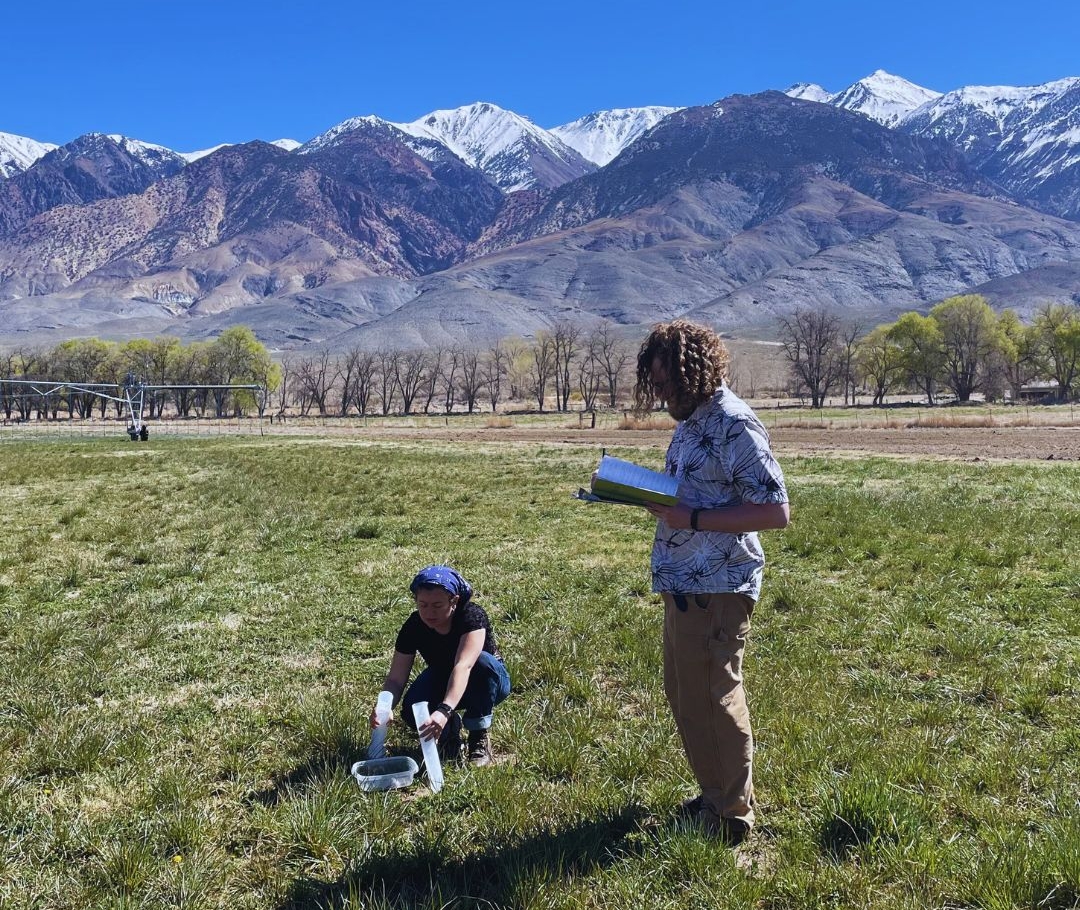
Paiz and Ostergaard in Hammil Valley conducting distribution uniformity tests.
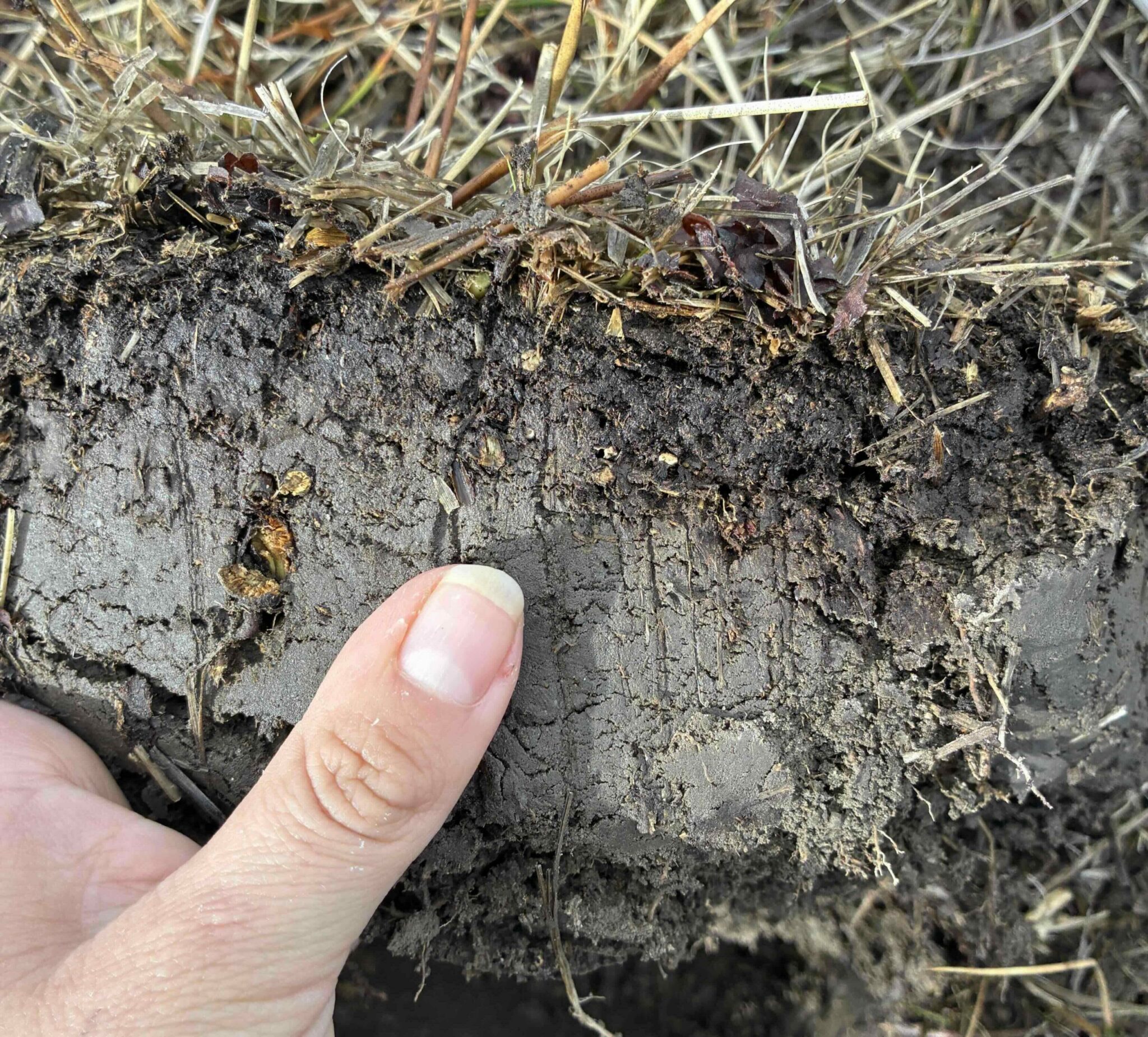
Pasture soil in Round Valley.
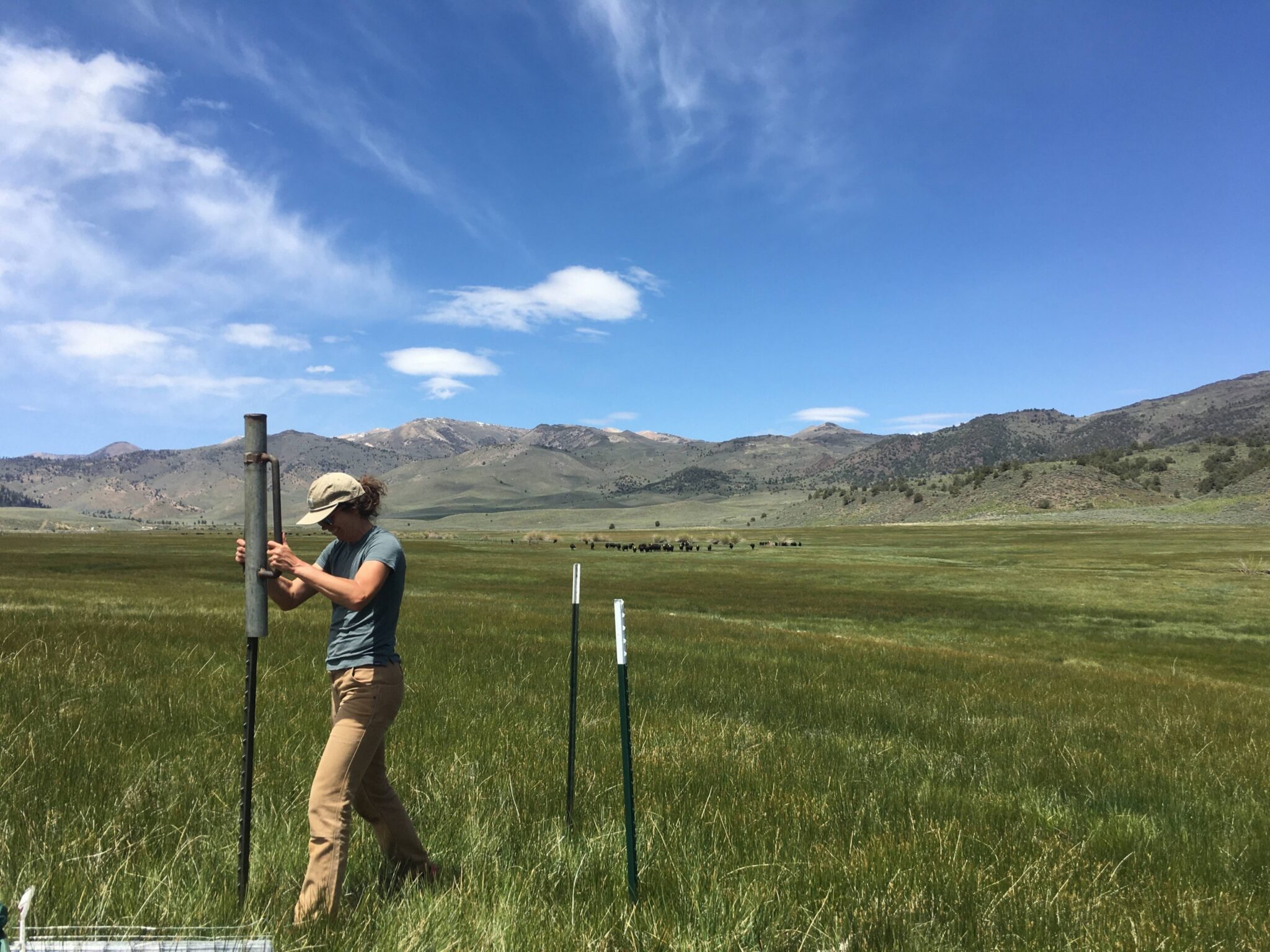
Amy Sturgill, conservation programs director, putting in a fence post on a conservation easement with rangeland.
When ranchers and farmers invest in soil health, everyone benefits
There is a science to managing any land, whether rangelands with livestock grazing or farmlands with rotating crops. Many ranchers and farmers work hard to ensure that the grasslands they steward stay healthy by implementing practices that maintain–and ideally, improve–the health of the soil. One way they do that is by partnering with Eastern Sierra Land Trust (ESLT) and Natural Resource Conservation Service (NRCS).
“My job is to connect ranchers and farmers with the tools they need to make their operations sustainable in the long term, economically, ecologically, and culturally,” Paiz states.
Sustainable agriculture, in this context, means engaging in practices that maintain the integrity of the soil, the water, and the local ecosystems–rather than degrading them. Regenerative agriculture takes that responsibility up a notch and means engaging in practices that improve or restore the soil, etc. Both forms of agriculture also mean that, as a direct result of implementing those practices, local ranching families can maintain a way of life that exurban development has made rare, especially in California.
“Most local ranchers and farmers want to implement the best practices available, to improve the health of their soil or reduce the amount of water they use, for example,” shares Paiz. “The main hurdles they face are access to guidance and capital to take a risk and implement those practices. In our service area, as in most of the United States, family-operated agriculture is not a highly lucrative business. When you’re getting paid a lump sum once, maybe twice a year, it can be difficult to try something new that might jeopardize your bottom line, even if it might be best long-term.”
That’s where Eastern Sierra Land Trust (ESLT) and partner organizations like the Natural Resources Conservation Service (NRCS) step into the scene. Later this year, we will share more stories of what this looks like by diving into recent and ongoing projects where local farms and ranches are utilizing these tools and succeeding. Stay tuned.
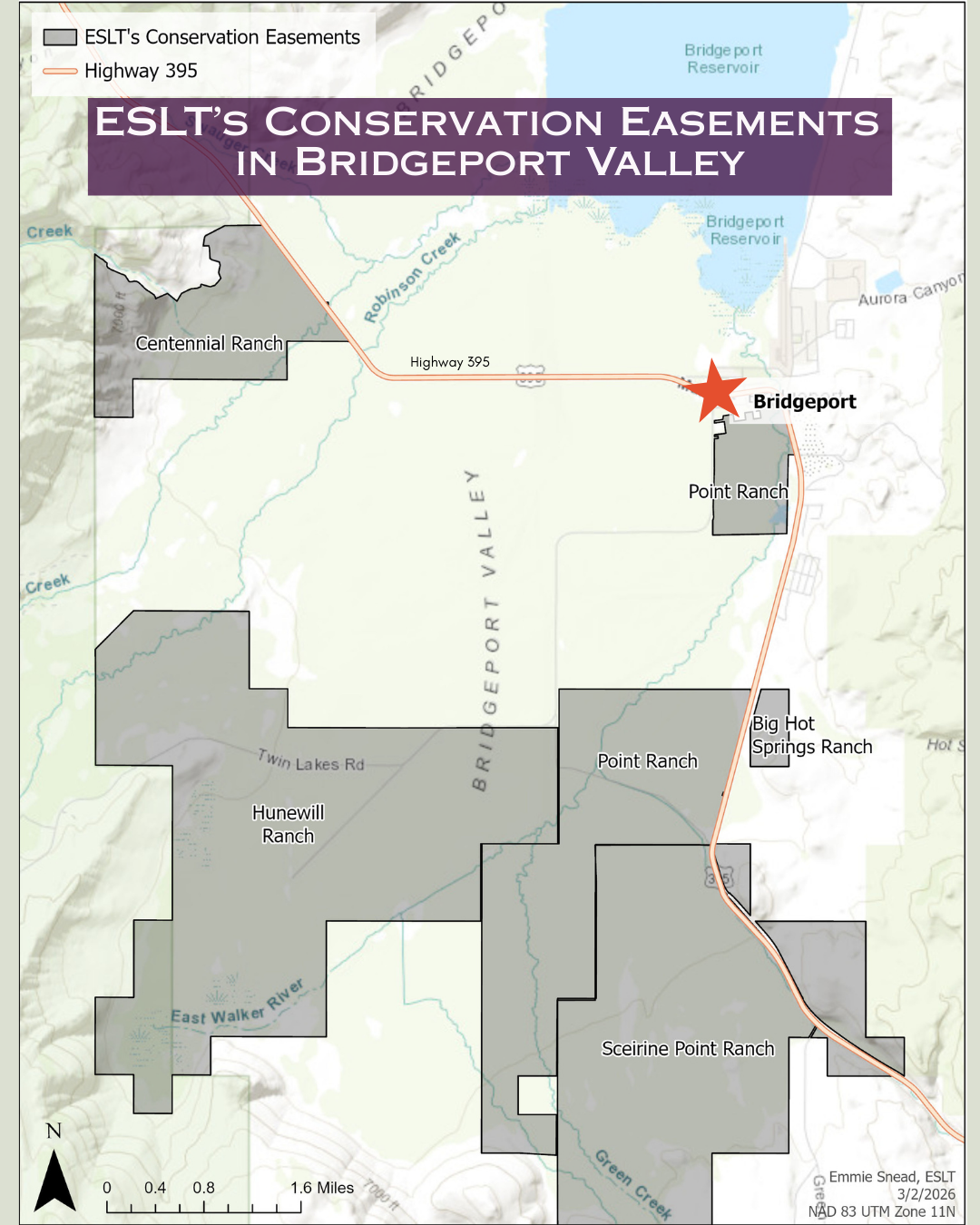
Map shows six conservation easements with rangelands in Bridgeport Valley. These are a direct result of ongoing partnerships between landowners, ESLT, and conservation partners.
Support sustainable agriculture in the Eastern Sierra
Next time you’re driving through the Bridgeport Valley, take a second to appreciate that these healthy soils make healthy grass make healthy food, protected forever. (See above map.) Six conservation easements in Bridgeport Valley are a direct result of forward-thinking collaboration between local ranchers, NRCS, Eastern Sierra Land Trust, and conservation supporters like you.
Giving to the Eastern Sierra Land Trust is one of the most impactful ways to support sustainable, working lands ranches in the Eastern Sierra.
Resources to dig deeper into soil science
There is an abundance of resources available to learn more about soil, why it matters, and how you can apply the latest science to take care of the intricate systems below your feet.
Three places to begin:
- If you grow food for your family or community, you may also qualify for funding and technical assistance opportunities to support improvement projects. Based in the Eastern Sierra? Call the Bishop NRCS Field Office at (760) 872-6111. Applications are open year-round!
- Visit the NRCS Soil Science page to learn more about managing, conserving, and appraising your “most valuable investment – the soil.” From soil surveys to soil science research, the NRCS offers a web of resources.
- Explore more resources about Soil Health on the Eastern Sierra Land Trust website.
Additional References
- Carbon – The Chemical Basis for Life. (2024, November 22). https://bio.libretexts.org/@go/page/12676.
- Elola, Liltana. Grassland Soil Science and Fungal-Bacterial Interactions | Hopland REC.
- Sierra Meadows Partnership | California | Why Meadows. 2018.
- USDA: Sustainable Agriculture.
- Wei, Clarissa. How the Owens Valley Paiute Made The Desert Bloom | Tending the Wild. PBS SoCal. December 15, 2016.
- Weir, Kirsten. Forest Carbon 101. The Nature Conservancy. February 28, 2022.
Article by Allie Rigby, Communications Manager at Eastern Sierra Land Trust.

Leave A Comment